Yesterday, Scarlett Johansson made big waves after the Wall Street Journal reported that the actress has filed a lawsuit against Disney claiming that the company breached their contract when pivoting Black Widow from a traditional theatrical window to a hybrid release placing the film on Disney+ (via Premier Access) without adjusting the existing contract after multiple requests from the Johansson’s reps were allegedly ignored.
The outlet reporting that moving Black Widow to Disney+ could end up seeing Johansson lose a hefty $50 million in bonuses.
Disney has responded to the lawsuit with the following statement:
“There is no merit whatsoever to this filing. The lawsuit is especially sad and distressing in its callous disregard for the horrific and prolonged global effects of the COVID-19 pandemic. Disney has fully complied with Ms. Johansson’s contract and furthermore, the release of Black Widow on Disney+ with Premier Access has significantly enhanced her ability to earn additional compensation on top of the $20M she has received to date.”
“It’s no secret that Disney is releasing films like Black Widow directly onto Disney+ to increase subscribers and thereby boost the company’s stock price – and that it’s hiding behind Covid-19 as a pretext to do so. But ignoring the contracts of the artists responsible for the success of its films in furtherance of this short-sighted strategy violates their rights and we look forward to proving as much in court,” John Berlinksi, Johansson’s attorney, told Business Insider.
Interestingly enough, while the statement says the suit doesn’t have “merit” they’re not willing to say they didn’t breach the contract. This is likely because that could be used against them if this goes to court as a public statement would be used as evidence. It’s worth mentioning that only a judge would be the one to gauge if this lawsuit has merit, not Disney’s fleet of lawyers that are likely looking to avoid paying out Johansson the millions she believes she is owed for as long as possible.
Scarlett’s contractual bonus/back-end deal with Marvel/Disney isn’t a new thing as other actors such as Robert Downey Jr. has had similar deals as an incentive to stick around beyond their original lengthy contract. When Johansson originally signed on to work with Marvel, she was low-balled during the Phase One era spearheaded by Ike Perlmutter having to commit to 6-9 films while other actors made much much more for the same level of work. The idea was that bonuses were established to reward legacy actors for future/past contributes to the Marvel franchise. In the case of Black Widow, she was a producer and helped shape the film.
It’s notable that while Disney is attempting to shame Johansson to filing a lawsuit during the pandemic, the company is extremely comfortable laying off over 32,000 employees along with earning money from their theme parks and in-person theatrical releases as the Delta variant has been an increasing danger to the American public for months now.
During the opening weekend of Black Widow’s domestic release, Disney felt the need to gloat about earning a solid $80 million at the box office alongside another $60 million from Premier Access earnings as they issued a press release highlighting the money they made. Seemingly bragging they were able to get a large amount of people they were able to coax to theaters.
They’re also releasing Jungle Cruise this weekend as the CDC has revealed the Delta variant is as infectious as chicken pox and an indoor location is the perfect way that the virus could be transmitted to the unvaccinated.
Both NATO and IMAX have pointed to the Premier Access release for Black Widow’s huge drops between weekends that was directly connected to mass online piracy. A regular theatrical window would normally protect the studio from piracy tanking box office until the film hit VOD or home video. As most people wouldn’t be as interested in downloading a blurry cam version recorded on someone’s phone compared to an HD version ripped from the streaming source provided by Disney+.
Yesterday, the Walt Disney Company announced a new initiative to get more content going for its streaming services such as Disney+, ESPN+, and Hulu from its sports, television, and film divisions. The new division will be called The Media & Entertainment Distribution group led by Kareem Daniel.
It sounds like they’ll be dedicating a lot more resources and money than they have previously as means to compete with competitors like Netflix and Amazon. However, this announcement says nothing about them throwing their 2021 theatrical slate on Disney+ and never mention a thing about ending theatrical releases altogether only pushing to place more content on their streaming services.
We will get more details on these plans on December 10th.
During an interview with CNBC, Disney’s new CEO Bob Chapek was quick to point out that they aren’t looking to stop the theatrical experience and would be announcing further details.
Also, specifically downplayed COVID-19’s role in the decision.
CHAPEK: “I would not characterize it as a response to Covid. I would say Covid accelerated the rate at which we made this transition, but this transition was going to happen anyway. Because essentially what we want to do is separate out folks who make our wonderful content based on tremendous franchises from the decision making in terms of prioritization is on how it gets commercialized into the marketplace. And what we want to do is leave it to a group of folks you can really see objectively across all of the constituents we have and various considerations we’ve got and make the optimal decision for the company as opposed to having it predetermined that a movie is destined to theaters or that a TV show is destined for ABC. So what we really want to do is provide some level of objectivity and really make it a decision that benefits the overall company and its shareholders.”
When pressed on Disney’s commitment to the theatrical model Bob said the following that gives the impression they’re not giving up on the theatrical model just yet.
CHAPEK: “We’ve benefited from a tremendous relationship with theatrical exhibition for many many many years as dynamics change in the marketplace though we want to make sure that we are giving consumers who want to go to theaters to experience everything that a theatrical release can give them, we want to continue to give them that option but at the same time there are a lot of consumers that want to experience a movie in the safety, comfort, and convenience of their own home for whatever reasons they do.”
To me, it sounds like either they are going to pursue a shorter theatrical window or a mixed model of day-and-date which obviously the theater industry wouldn’t be terribly pleased about on either front.
Here is the official press release from the Walt Disney Company website that gets a little more into the weeds about what all this means.
In light of the tremendous success achieved to date in the Company’s direct-to-consumer business and to further accelerate its DTC strategy, The Walt Disney Company (NYSE: DIS) today announced a strategic reorganization of its media and entertainment businesses. Under the new structure, Disney’s world-class creative engines will focus on developing and producing original content for the Company’s streaming services, as well as for legacy platforms, while distribution and commercialization activities will be centralized into a single, global Media and Entertainment Distribution organization. The new Media and Entertainment Distribution group will be responsible for all monetization of content—both distribution and ad sales—and will oversee operations of the Company’s streaming services. It will also have sole P&L accountability for Disney’s media and entertainment businesses.
The creation of content will be managed in three distinct groups—Studios, General Entertainment, and Sports—headed by current leaders Alan F. Horn and Alan Bergman, Peter Rice, and James Pitaro. The Media and Entertainment Distribution group will be headed by Kareem Daniel, formerly President, Consumer Products, Games and Publishing. All five leaders will report directly to Bob Chapek, Chief Executive Officer, The Walt Disney Company. Disney Parks, Experiences and Products will continue to operate under its existing structure, led by Josh D’Amaro, Chairman, Disney Parks, Experiences and Products, who continues to report to Mr. Chapek. Rebecca Campbell will serve as Chairman, International Operations and Direct-to-Consumer. Bob Iger, in his role as Executive Chairman, will continue to direct the Company’s creative endeavors.
“Given the incredible success of Disney+ and our plans to accelerate our direct-to-consumer business, we are strategically positioning our Company to more effectively support our growth strategy and increase shareholder value,” Mr. Chapek said. “Managing content creation distinct from distribution will allow us to be more effective and nimble in making the content consumers want most, delivered in the way they prefer to consume it. Our creative teams will concentrate on what they do best—making world-class, franchise-based content—while our newly centralized global distribution team will focus on delivering and monetizing that content in the most optimal way across all platforms, including Disney+, Hulu, ESPN+ and the coming Star international streaming service.”
Under the new structure, the Company’s three content groups will be responsible and accountable for producing and delivering content for theatrical, linear and streaming, with the primary focus being the Company’s streaming services:
STUDIOS: Messrs. Horn and Bergman will serve as Chairmen, Studios Content, which will focus on creating branded theatrical and episodic content based on the Company’s powerhouse franchises for theatrical exhibition, Disney+ and the Company’s other streaming services. The group will include the content engines of The Walt Disney Studios, including Disney live action and Walt Disney Animation Studios, Pixar Animation Studios, Marvel Studios, Lucasfilm, 20th Century Studios and Searchlight Pictures.
GENERAL ENTERTAINMENT: Mr. Rice will serve as Chairman, General Entertainment Content, which will focus on creating general entertainment episodic and original long-form content for the Company’s streaming platforms and its cable and broadcast networks. The group will include the content engines of 20th Television, ABC Signature and Touchstone Television; ABC News; Disney Channels; Freeform; FX; and National Geographic.
SPORTS: Mr. Pitaro will serve as Chairman, ESPN and Sports Content, which will focus on ESPN’s live sports programming, as well as sports news and original and non-scripted sports-related content, for the cable channels, ESPN+, and ABC.
The Media and Entertainment Distribution group, led by Mr. Daniel, will be responsible for the P&L management and all distribution, operations, sales, advertising, data and technology functions worldwide for all of the Company’s content engines, and it will also manage operations of the Company’s streaming services and domestic television networks. The group will work in close collaboration with the content creation teams on programming and marketing.
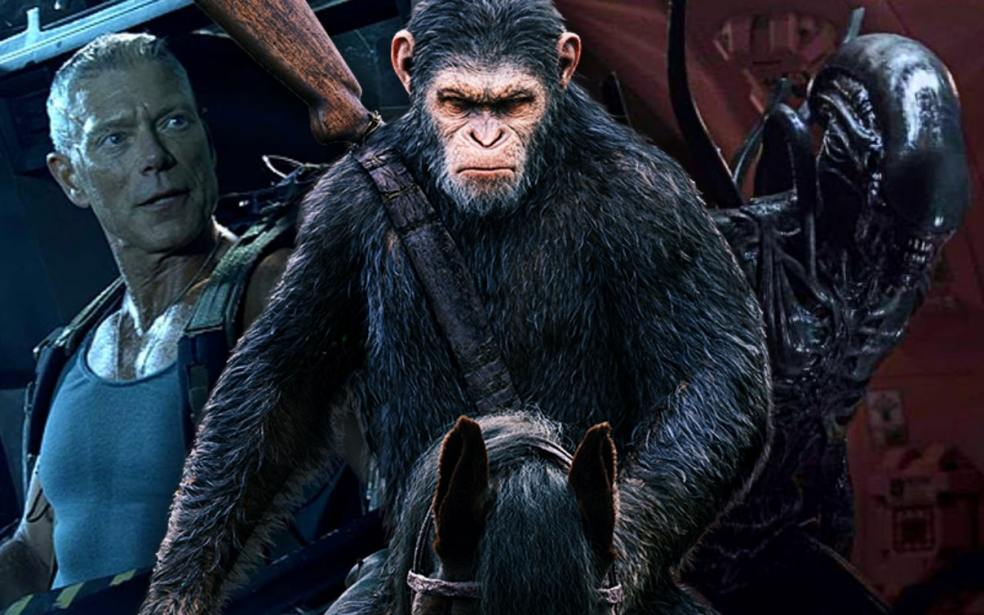
It’ll be interesting to see if Disney+ will start mining IP from the 20th Century Studios side of things soon as Disney+ series and limited series focused on properties like Avatar and Planet of The Apes could be extremely successful. In the press release they suggest that they could end up making episodic projects based on 20th Century properties.
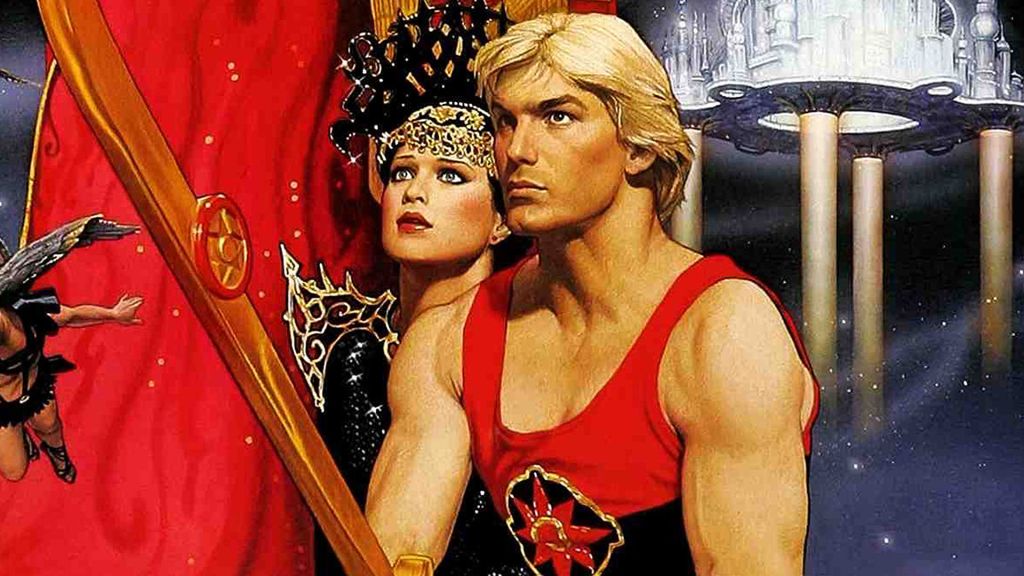
A live-action Flash Gordon series stands out as a property that Disney really could do justice with on Disney+ and be a counter of sorts to their Star Wars shows as it could be way more swashbuckling than the Lucasfilm property that was inspired by it. Taika Waititi (Thor: Ragnarok, Thor: Love & Thunder, Jojo Rabbit) is attached to direct an animated Flash Gordon film and at one time 20th Century was developing a live-action feature as well from directors Matthew Vaughn (X-Men: First Class, Stardust, Layer Cake) and Julius Avery (Overlord) involved at different points.
I wouldn’t even put it past Disney to reboot John Carter eventually given the Volume/StageCraft would allow them to make a series more cost effective that world like Flash Gordon is different enough from Star Wars it would be worth pursuing.
Of course, this could mean a major influx of more shows from Marvel, Star Wars, and Pixar universes but might also see Hulu getting a bump of adult content as well with franchises like Alien (Noah Hawley pitched an Alien series to FX) and Predator just collecting dust while they could be helpful to get more eyeballs on Hulu. HBO Max had recently crowed about Ridley Scott’s sci-fi series Raised By Wolves being the most popular original on their service when announcing they were moving forward with a Season 2 order.
Matthew Vaughn has also been talking up the idea of a Kingsman spinoff series that could fit nicely at Hulu.
Disney certainly has a massive gap in the adult market and places like Canada don’t have access to Hulu and that really needs to change if they want to compete with Netflix/Amazon on an international level as those services offer content to both kids and adults alike. Cornering the kid market just won’t be enough for Disney if they want to grow their streaming presence.
I guess we’ll have to wait for December 10th to get more concrete answers about what all this actually means for content that is already in the can or is about to begin filming.




 THE RONIN